Friday, 13 May 2011

The Proposition (2005)

The whining sound of ricochet gunfire screams across the screen, bullet holes rip through corrugated iron walls, filtering harsh shafts of light into squalid surroundings. Distinguished Australian actor Noah Taylor is caught in the side of the head by a stray bullet, his part in the movie over before the first reel has finished. This is the opening scene of The Proposition, a violent brooding western directed by John Hillcoat. It’s one of the best films to come out of Australia in the last 10 years and it’s a modern cult classic.

At the heart of the The Proposition lies a dark poetic script written by musician Nick Cave. The story is set against the harsh backdrop of the Australian outback in the late 19th century where brutality is an everyday occurrence, the law is mostly disregarded, women are treated poorly and a low standard of living is common. Yup, life is tough. With this as his basis, Cave (who also had a hand in creating the haunting film score) has written a murder ballard for the screen - a bloody story of broken family ties, family betrayals, and the feeble British attempts to tame the wilds of the Antipodes.
The movie begins as outlaw Charlie Burns (Guy Pearce) and his kid brother Mikey are captured during the vicious shootout described above. They, along with their elder brother and gang leader Arthur Burns, are accused of the rape and murder of a local woman and her family. The man who has caught them is Captain Stanley (Ray Winstone) a British policeman stationed in the outback. Stanley gives Charlie Burns a choice. He has 9 days before Christmas Day to go out into the wilderness and find Arthur and kill him otherwise Mikey will hang. If he does so, him and his kid brother go free.

Guy Pearce is a great choice for the sinewy, steely-eyed Charlie Burns and gives a tremendous display of grit and soul in equal measure – we’re a long way from Mike from Neighbours here! Likewise Ray Winstone gives one of his finest performances in recent years as the troubled Stanley, far from home and a stranger in a strange land, his face full of regret and despair as he faces the consequences of his actions. Disillusioned with life down under but determined to “civilise this land”, Stanley cuts a weary figure as he looks out onto the arid landscape and murmurs under his breath “Australia…. What fresh hell is this?” Danny Huston plays the animal like Arthur Burns as an unseen haunting “Kurtz” like presence for the first half of the movie and as a wild and psychopathic mystic man of the hills once he finally makes his appearance.

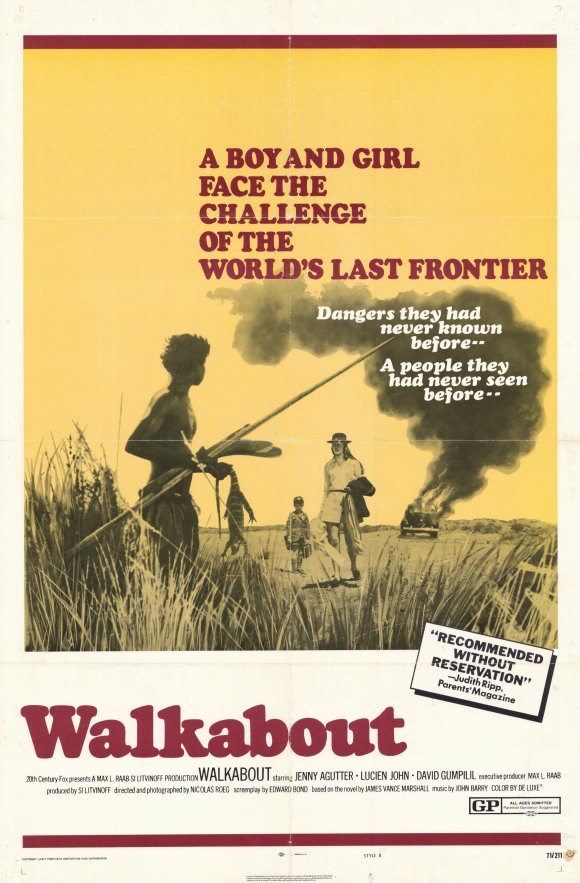
The Proposition has five star cameos a plenty. Emily Watson portrays Stanley’s prim and disturbed wife Martha, forced to tag along for the ride and trying to create her home comforts in the middle of the desert. David Whenham puts in a good turn as the cold-blooded voice of local authority Fletcher who orders a merciless and grotesque flogging without thinking twice. Aborigine actor David Gulpilil has a bit part role as the tracker Jacko. Gulpilil first came to prominence in Nic Roeg’s 1970 “children’s” movie Walkabout and Hillcoat's casting of him here is a tribute to Australian cinema history. Best of all is John Hurt as the eccentric and murderous bounty hunter Jellon Lamb, a Falstaffian character that Charlie runs into on the hunt for his brother.“A citizen of the world and an adventurer” in his own words, Lamb provides some light relief amidst the gothic violence and heavy atmosphere.

And violent the film is! Heads explode under shotgun fire, a man manages to shoot his own feet off in error, human bodies are run through with spears, flies swarm everywhere as vultures peck at animal carcasses and blood splatters over faces and clothes as a young boy is brutally flogged. Hillcoat and Cave never shy away from the graphic or the extreme and that's what gives the film a realistic and natural edge.

However, contrasted against the blood, the grit, the dirt, the squalor and the bad teeth, Hillcoat and Cave weave wisps of poetry about the sun, the moon and the stars that seem to float across the screen as Charlie makes his journey into the wilds. Alongside the stunning photogrpahy of the unforgiving landscape, the deep red colours of bloodshed and the big orange sun that sets against the horizon, it's these metaphysical touches that set The Proposition apart from your average western.

Never raise a glass with a man who's name you do not know...

Sunday, 8 May 2011

The Conversation (1974)


If you're up for some late night 1970s paranoia then check out The Conversation, Francis Ford Coppola's conspiracy thriller classic. The plot is pretty straightforward. A man and a woman take a stroll in their lunch break around Union Square in San Francisco. They talk about everyday things - Christmas presents, tramps on park benches, when they are next going to meet... perhaps they are having an affair, so what? It all seems quite ordinary, yet someone wants to have their conversation recorded. And they've asked surveillance expert Harry Caul, "the best bugger on the West coast" to do it. When Harry hears a snippet of the conversation that he thinks might endanger the lives of the couple he takes measures to protect them, forcing him to question his own very strong personal values and putting his life in danger.

From this simple premise Coppola weaves themes of mistrust, paranoia and the power of the establishment to invade people's most private moments. Top acting honours go to Gene Hackman who stars as the anonymous Harry Caul. With a grey translucent raincoat, a pair of rimless specs and a truly awful 'tash as his only props, Hackman paints a picture of a very private and insecure man with no friends and no life outside his work. His only releases from his job are playing the saxophone in his drab apartment and confessing his sins to the local priest. It's a very selfless underplayed portrayal of a nobody, a million miles away from Popeye Doyle, and it underlines what a brilliant actor Hackman is. Look out too for a very young and menacing Harrison Ford and the uncredited Robert Duval as the mysterious "Director".

The other star of the show is Walter Murch's sound mixing. It's not often that sound mixing plays so prominently in a movie, but here it should share equal billing with the actors and the director. The scenes of Hackman cutting, splicing, tweaking and fine tuning the recording sit right at the heart of the movie. The sound of tapes rewinding and playing back over and over until the conversation is 100% clear are quite hypnotic and fascinating. It's almost as though we are watching a lesson in how to record sound for the cinema.

Francis Ford Coppola made The Conversation in between his first two Godfather films. That's a pretty amazing feat - sandwiched between two of the most acclaimed epics in movie history we have a beautifully crafted and personal film about the mood of the country in the post Vietnam years and amidst the lies and deceit of Nixon's presidency. Remarkably, The Conversation was conceived and shot before Watergate broke, and the political scandal casts a large shadow over the film. Coppola has even gone on record to say how amazed he was that the equipment used by Harry in the film was previously used by the Nixon administration for surveillance.

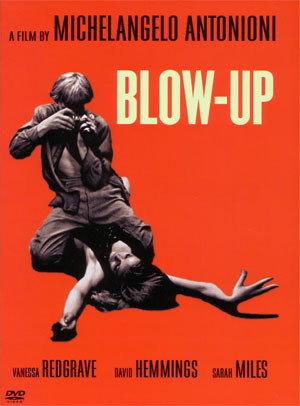
There's a heavy influence in the movie from Antonioni's Blow Up, which does the same thing for photography as The Conversation does for sound. In turn, Brian de Palma took chunks of The Conversation's themes and plot for his 1981 film Blow Out about a sound recorder trying to uncover a political assassination. And Hackman resurrected Harry Caul in Tony Scott's late 90s thriller Enemy of The Sate, albeit under a different name although the two characters are almost identical.

The Conversation itself sits in good company alongside other 70s conspiracy movies such as The Parallax View, Klute and Three Days of The Condor. However none of these films have either the depth of character or the simplicity of The Conversation. It's brilliant movie which leaves the late night viewer with food for thought long after the end credits have rolled.

Tuesday, 3 May 2011

In a Lonely Place (1950)


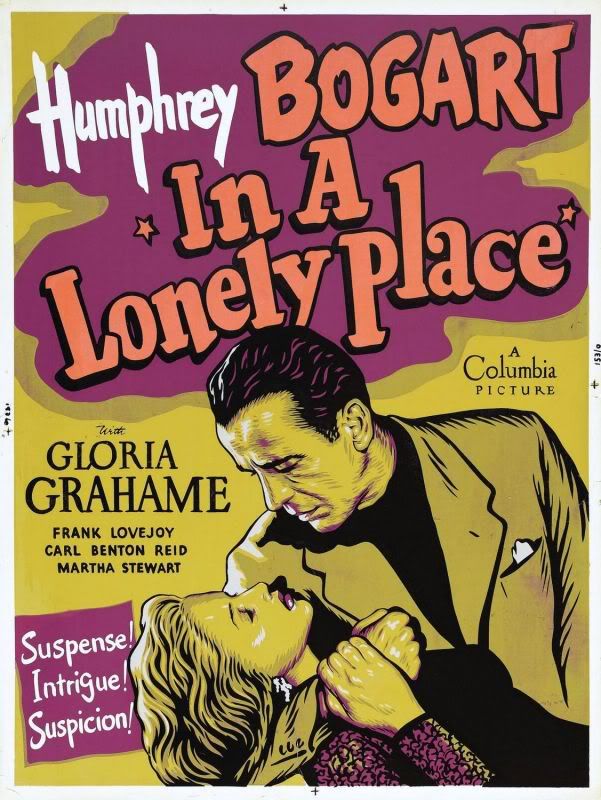
The film poster says it all really. Humphrey Bogart holds Gloria Grahame in a passionate clinch, her eyes closed in orgasmic bliss. But take a closer look... is he actually strangling her? And is that a look of menace on his face? Perhaps she is already dead? Maybe this isn't the great romance we originally thought it to be. Maybe it's something a little more destructive.

In a Lonely Place is a film noir-come-melodrama directed by Nicholas Ray. Bogart plays Dixon Steele a cynical and not particularly successful Hollywood screenwriter with major anger management issues. Gloria Grahame plays the equally brilliantly named Laurel Gray, the sultry neighbour of Dix who firstly acts as his alibi for murder and then falls in love with him. The love story is the main thrust of the plot alongside the police investigation into the killing of a coat-check girl who was helping Dix with a script. As the film progresses Laurel's suspicions that he may in fact be the murderer increase. It is her rising panic and paranoia that drive the story along, coupled with Dix's charm and nonchalance as the net seems to be closing in on him.

The plot and themes of the movie stem from the characters and both of the main protagonists are vivid three dimensional personifications with flaws aplenty. The role of Dixon Steele has depth and complexity by the bucket load, and Bogart really sinks his teeth into it. Sardonic yet also threatening he mixes dry witticisms with a bitter rage that is always bubbling near the surface. In the first reel of the film he gets involved in two separate spats, first an angry exchange of words with another driver at a crossing and then in a bar when someone loudmouth slags off an actor friend of his. It soon comes to light that these are just the latest in a long list of altercations. The message is clear - do not mess! Yet he also reveals the lonely and disturbed side of a character low on confidence and lacking in self esteem, the bottom lip chewed to distraction in typical style. It's classic Bogart.

Likewise Gloria Grahame's performance is considered one of her best. Grahame made a career playing vulnerable yet extremely desirable femme fatales and gangster's molls who usually meet a sticky end. She had hot coffee thrown in her face by Lee Marvin in The Big Heat and was throttled to death by Broderick Crawford in Human Desire. Yet that sly Southern drawl, the merest rise of an eyebrow and the exhalation of a plume of cigarette smoke suggests a cunning and devious mind at work, most often driven by sex and desire.

The third corner of the triangle is the director Nicholas Ray. Ray was a bisexual Hollywood maverick and wild man, a hardcore drinker and drug-taker who directed some of the most provocative pictures that came out of the Hollywood studio system in the 1940s and 1950s - They Live by Night, Johnny Guitar and Rebel Without a Cause to name a few. Unsurprisingly, he drove the powers that be to distraction with his antics and increasingly left-field films and was eventually shut out by the Hollywood establishment. In his later years he was celebrated by German director Wim Wenders who cast him in his film The American Friend and co-directed Ray's final film Lightning Over Water.

Gloria Grahame and Ray were in a tempestuous marriage at the time In a Lonely Place was being made. The relationship actually broke up whilst the film was being shot. Such was Ray's macho paranoia, he forced Grahame to sign a humiliating stipulation to her contract on the movie, which gave her little or no say in the development of her role at all, nor was she allowed to vent frustration at her lack of independence. Ray even took to sleeping in a dressing room so that no one could discover the truth that director and leading lady were no longer an item. Legend has it that the couple finally divorced a couple of years later when Ray found Grahame in bed with his thirteen year old son.

It's this sense of marital mistreatment that works it's way into the heart of the movie. It's obvious by the end of the film that the "lonely place" of the title refers to jealousy, insecurity, vitimisation, low self esteem and self-destructive behaviour that ultimately leads to violence, raw emotions that can only be played out by those that have experienced them...

Bogart takes Gloria Grahame for a ride out to the dark side

Monday, 11 April 2011

The Hill (1965)


Sidney Lumet died at the weekend and as a tribute I'm putting this one forward for the late show. The Hill is set in a North African military prison at some point during WWII. It's a typical story of sadistic guards and wardens vs the inmates who struggle to survive harsh life in the slammer. The prisoners themselves are inside for the pettiest of crimes yet are treated like grade one criminals. The Hill of the title refers to a mountain of sand in the middle of the camp that the prisoners are made to run up and down in the baking hot sun every day. Presiding over the regimented daily punishment routine is hard-ass warden Harry Andrews, who takes pleasure in breaking men down in order to build them up once more into toy soldiers. When one of the prisoners dies on The Hill, the whole system is called into question, fingers are pointed, and revolution is in the air...

The Hill is an engrossing and intelligent drama. The themes that run throughout the film range from the rebel's constant need to challenge authority and the faceless machine that runs it, through to the latent and not so latent racism inherent in British society. The film is shot in stark black and white to empahsise the contrast between the punishing African sun and the bleak interiors of the prison cells and guard's quarters. With lots of tight camera angles and many close ups, the strange clanging sounds from within the cells and sudden jerky camera movements only add to the rising tension.

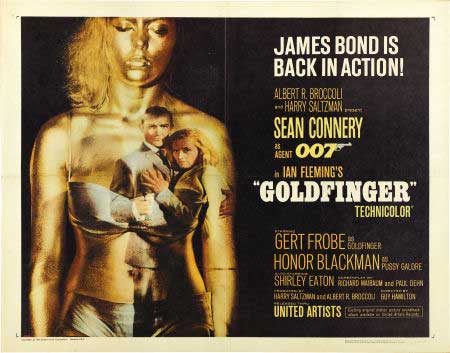
The film is also strangely stage-like, not surprising considering Lumet's off-Broadway background. You can imagine The Hill playing out in fringe theatre, a sparse set with the actors performing in front of and around the vast sand dune. The acting is uniformly excellent. Lumet always seemed to bring the best out of his actors in his films and this is no exception. Fresh from Goldfinger, Sean Connery stars as prisoner Sgt Joe Roberts, the main symbol of subordination and revolt. Connery excels in the role, his delight increasingly apparent as the system crumbles around him just as his frustration in his own inadequacies overwhelms him. Harry Andrews puts in one of his usual creepy performances as Warden Wilson whilst the two Ian's, Bannen and  Hendry, play good and evil respectively as the two "staff" guards in charge of the day to day running of the prison. Even Roy Kinnear puts in a good turn.

The Hill isn't one of the more celebrated films of Sidney Lumet. It's been overshadowed somewhat by his albeit terrific 70s movies such as Serpico, Dog Day Afternoon and Network as well as his courtroom dramas 12 Angry Men and The Verdict and also his final film Before The Devil Knows You're Dead. To be honnest though, this list doesn't even touch the sides. Lumet made more than 45 films over the space of 50 years, and stayed at the top of the game throughout. He was a true American great.

RIP

Saturday, 2 April 2011

The Long Goodbye (1973)


See that guy in the top right hand corner of this blog? Curly black hair, dark suit, tie loose at his neck with the top button undone on his shirt? Looks like he's been dragged through a hedge backwards? That is Elliott Gould who stars as private detective Philip Marlowe in Robert Altman's 1973 classic The Long Goodbye. He's one of my favourite characters from the movies so he holds prime position at the top of this page. The film itself is a funny, knowing look at 1970s culture and private detective movies as a whole. A second viewing reveals the movie as some kind of experiment in deconstructing genres and a few myths of popular fiction. However don't let that put you off - on the surface The Long Goodbye has no high brow pretensions, it's just a damn fine film.

Loosely based on the 1953 novel by Raymond Chandler, the story begins with Marlowe being cajoled into driving his friend Terry Lennox south to Tijuana after Lennox claims to have had a run of the mill bust up with his wife Sylvia. On his return to LA, Marlowe is picked up by the police as an accessory to murder. Sylvia is dead and Lennox is the number one suspect. When Marlowe hears of Lennox's subsequent hotel suicide, he sets about trying to clear his friend's name and find the real murderer. Along the way he encounters a washed up alcoholic writer (superbly acted by Sterling Hayden) with wife in toe, a midget psychiatric "doctor", a psychopathic Jewish mobster and his gang of hoods and a bevy of half-naked chanting, yoga practising girls who live in the flat opposite.

Altman's film plays clever with both plot and themes, updating a post-war 1950s LA to the post-hippy fallout world of the 1970s. In essence the movie is a bit of an ode to Hollywood and the mass of black and white thrillers that populated cinemas and picture houses in the 30s, 40s and 50s. By setting the film in the 70s, Altman also draws comparisons between the selfish me generation of that era and a more innocent age when friendship, loyalty, morality and trust stood for something - themes that run through the majority of Chandler's work as well, although in the movie there is much humour and satire to soften the blow.

The Long Goodbye is a heavily stylised movie. The film is shot in golden textures by Vilmos Zsigmond and post flashed to add depth of colour. This means that the film is actually exposed slightly before developing so that the extra sunlight mutes the colours and creates a softer focus to what we see on screen. As such, it looks like we are watching the 1970s through a 1950s filter. Alongside this, Altman and Zsigmond use a continually moving and roaming camera, tracking, panning, zooming in and out through windows and mirrors, focusing on areas of the screen that seem insignificant and of interest only to the director, but actually serve to heighten the senses. Altman's use of John Williams' memorable theme tune also disorientates the viewer. The music plays almost constantly throughout the film in several different formats - from a jazzy lounge piano piece to a souped up supermarket background muzak, from Mexican flamenco guitar to a doorbell ring, and from a sitar led Far Eastern theme to a Yiddish tune hummed by Mark Rydell's gangster character Marty Augustine.

Central to the success of the movie as a whole is Elliott Gould's performance. At once shambolic, dishevelled and wise-cracking, Gould plays Marlowe as a man out of time - Rip van Marlowe. Constantly smoking (no one else smokes in 1970s health conscious LA) and chanting his mantra "It's OK with me" Gould drifts through the film always one step behind the plot. Roughed up, used and abused, and ultimately betrayed, it should come as no surprise when the worm turns at the climax.

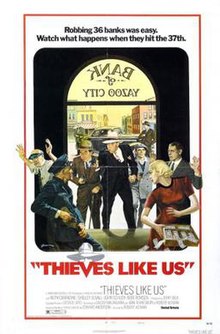
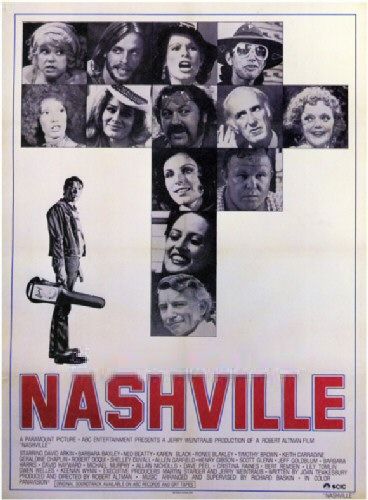
The Long Goodbye came bang smack in the middle of a rich run of form in Robert Altman's career - M.A.S.H., California Split, Thieves Like Us and Nashville all achieved either box office or critical success, sometimes both. It wasn't always the case, nobody produces gold forever, but right up until his death Altman was making his own films on his term sand we salute him for that.

Marlowe shares a drink on the beach with Roger Wade...

Friday, 18 March 2011

Trees Lounge (1996)


Trees Lounge is a film that celebrates the twin cultures of hard drinking and under-achievement. The movie follows the trials and tribulations of alcoholic Tommy (Steve Buscemi who also writes and directs) as he tries not very hard to put his life back together after losing both his job and girlfriend. Rather than attempting to mend his errant ways, he chooses instead to spend most of his time in the bar of the title and with the company of the flies that swarm around it. Given a chance to earn some cash driving his uncle's ice-cream van, Tommy soon attracts the attentions of sexually precocious teenager and distant relative Debbie.

Chanelling the spirits of Charles Bukowski, Raymond Carver and Tom Waits, Trees Lounge is a film steeped in the traditions of modern American independent cinema. Story-wise, nothing much really happens. There are no car-chases, no violent murders. None of the characters are on any mystical journeys towards self realisation or change. Most of the time they just sit on their barstools and drink, kvetch, flirt badly and let life pass them by. If this all sounds like a bad episode of Cheers then think again - behind the banter and darkly comic moments this is a gritty slice of real life to rank alongside the best from American indie-king John Cassavetes.

Steve Buscemi directs his first feature with the lightest of touches, using lots of natural light and a stationary camera. He obviously knows the subject matter well, his unheroic portrayal of Tommy has the benefit of a wealth of experience. We all know Buscemi as Mr Pink, Tony B and "Nucky" Thompson but he's rarely been more charismatic than in Trees Lounge. Backing him up is cool as f**k Chloe Sevigny as Debbie, who serves as a breath of fresh air in Tony's humdrum drunken existence. Also on show are Samuel L Jackson, Mark Boone Jr and Anthony LaPaglia plus a few familiar faces from The Sopranos.

Trees Lounge is an absolute gem and definitely worth staying up for, so pull down the blinds, crack open the bourbon and line the shots up along the bar.

The oldest trick in the book...

Monday, 24 January 2011

Into The Night (1985)


Jeff Goldblum stars in his first leading-man role as Ed Okin, an everyman who's world is falling apart around him. His suburban life is meaningless, he hates his job and he's suffering from a bad case of insomnia. After discovering his wife in bed with a co-worker he takes off one night with the intention of escaping his dull existance.

Instead he ends up rescuing damsel in distress Michelle Pfeiffer from the clutches of some murderous Iranian hitmen who are after a bunch of smuggled emeralds. What follows is a road/chase movie around mid 1980s LA via highways, hotels and motels, Beverly Hills mansions, Malibu beach houses, Hollywood film sets and the glamorous Marina Del Ray.

Los Angeles has been portrayed 1000 times on the silver screen, and whilst Into the Night is no classic, it has cult status.
I guess the big problem with Into The Night is that it wants to be both an existential comedy/romance and a violent fast paced thriller. However the result is a film that's neither outrageously funny nor hugely exciting. An escapist's dream of a movie, it follows a pretty familiar narrative with it's fair share of cheesey dialogue and more than a few worn-out plot hooks.

Into the Night is, however, compulsive viewing for the late night movie fan. Jeff Goldblum's performance is one of superb understatement, his skin pale and his eyes heavy-lidded as insomnia grips him and there is real on screen chemistry between him and Michelle Pfeiffer. Added to that is a very inventive use of LA locations - the city looking bleached out and sundrenched in daylight whilst it shimmers in neon light by night.

The main talking point for film geeks is director John Landis's leftfield approach to bit-part casting. Following on from his big-time successes with Trading Places, An American Werewolf in London and The Blues Brothers (and Michael Jackson's Thriller video!), Landis decided to cast a whole host of his Hollywood film director friends in cameo roles. Blink and you'll miss... Don Siegel, Jonathan Demme, Lawrence Kasdan, Amy Heckerling, Paul Mazursky and David Cronenberg to name a few, alongside Landis himself as one of the four slightly comical Iranian killers.

The cast also includes such diverse character actors as Richard Farnsworth, Dan Ackroyd, Irene Papas and Vera Miles. Added into the mix are musical luminaries Carl "Blue Suede Shoes" Perkins and The Thin White Duke himself, David Bowie! In fact Bowie almost steals the show in his brief showing as English hitman Colin Morris, his knife fight with Carl Perkins one of the high points of the whole film.

Jeff Goldblum went onto great things from this. His very next film was The Fly which launched him into superstardom. Michelle Pfeiffer has also had a glittering career since Into The Night - critcal aclaim, nominations and awards followed her in many subsequent film roles. For Landis however, the film began a slow downward arc in his profession which resulted in such tripe as Spies Like Us, Beverly Hill's Cop III and Oscar (Sylvester Stallone's first and last foray into comedy). Sadly last year's attempted comeback Burke and Hare did little to change anyone's opinion that the funnybone is yet to be mended.

"You're very good..."